













Vincispin Casino Login In Italy

Access and security on Vincispin in Italy in 2026: quick steps, reset, payments and limits to stay clear-headed.

Fortune Gems 2 Slot

Table of Contents

  • The Dog House Megaways Slot
  • Lucky Joker 10 Extra Gifts Slot
  • Sword of Ares Slot
  • Floating Dragon Hold & Spin Slot
  • Leprechaun Riches Slot
  • Fruit Cocktail Slot
  • The Dog House Megaways Slot
  • Sword of Ares Slot
  • Fruit Million Slot
  • The Dog House Megaways Slot
  • Big Fisherman Slot
  • Big Fisherman Slot
  • Seven Books Unlimited Slot
  • Vincispin Fortune Slot
  • Sword of Ares Slot
  • Floating Dragon Hold & Spin Slot
  • 9 Mad Hats Slot
  • Floating Dragon Hold & Spin Slot
  • Big Bass Splash Slot
Login 1

Vincispin Login: Enter Without Wasting Time

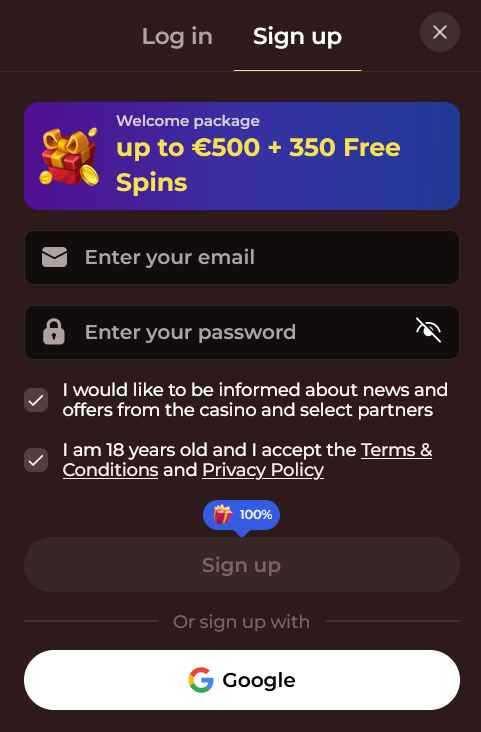
Imagine opening the platform after dinner, phone in hand and your head already full. You just want a short session, but you find yourself fighting with fields that fill themselves in and passwords that are “almost right”. The point, in 2026, is to create a way to log in that is repeatable: same device for the first setup, same stable connection, same correctly saved data.

Many login problems stem from a simple thing: haste. You try twice, then three times, then you change browser, then you switch to the computer. At that point, you no longer know which password is the “good” one and which reset is the “valid” one. The solution is more tedious but very effective: a clean attempt, then a break, then check the settings, only then a second attempt.

If you happen to see a screen that seems to reload or "go back", it's not always a malfunction. It's often cache, aggressive extensions, or a connection that switches between mobile network and Wi-Fi. It seems like a detail, but just a network change at the wrong moment and the action is interpreted as incomplete.

In Italy, the practical part remains the same: use real and consistent data, because access is designed for adults and for use in compliance with applicable rules. There's no need to fill the path with solemn phrases, you just need to do things calmly and in order, so when you want to play, you don't waste time on administrative steps.

Mobile Access: The Two Things That Make The Difference

Imagine being away from home, with a shaky signal, and entering your password with one hand. That's where autofill becomes an enemy: it suggests an old credential, adds a space, or changes a letter without you noticing. A practical trick is to type manually once, calmly, and then save the correct login: after that attempt, the phone stops "inventing" for you.

If the app or page behaves strangely, the smart choice is not to insist ten times. Close it, reopen it, stabilize the connection, and try again just once. A well-done reset at a calm moment is worth more than five nervous attempts.

Desktop Access: Avoiding Loops And Reloading Pages

Imagine being at the PC, convinced that everything is simpler, and instead a window keeps refreshing. In these cases, a linear sequence works: try in private browsing mode, disable extensions that block scripts for that session, then repeat the login just once. If something changes, you know what worked; if you change ten things at once, you never understand why.

Setting Up The Account Consistently

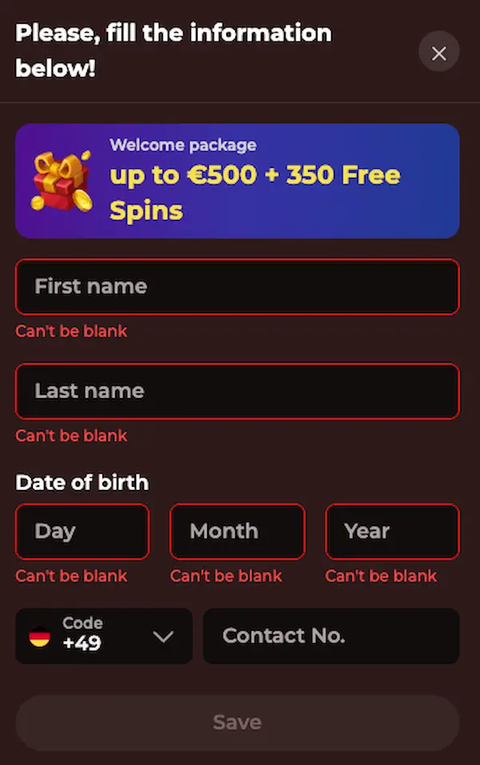
Imagine creating your profile while chatting with someone and filling in the fields “to finish quickly”. The next day you want to make an important request and discover that a piece is missing, or that a detail doesn't match. The adult part of a gaming platform isn't about “knowing everything”, it's about making your account area clean and consistent from the start.

Login 2

The routine that avoids stress is simple: check your email and number, confirm that local settings are correct for Italy, and securely save your credentials. Then, even before choosing a game, find where the transaction history and control tools (limits, time reminders, breaks) are located. When you know where to look, you move with less anxiety and make fewer mistakes.

Login 3

Vincispin Casino Login: What Changes In The Process

Imagine logging in without problems today, and tomorrow facing an extra check. This often happens when you change devices, when the network changes "too much" in a short time, or when you make many attempts in quick succession. It's not a punishment, it's a security brake. If you take it as an affront, you start clicking randomly; if you take it as a signal, you return to a clean procedure and solve it.

One thing that helps is to treat login as a two-phase process: first stability, then convenience. Stability means doing the initial setup on a single device, testing logout and login, and saving the data correctly. Convenience means adding the second device later, when you know the credential is correct and you're not struggling with autofill.

If you have the option to activate extra verifications (e.g., an additional step to confirm identity), it's worth doing it at a calm moment. Imagine having to set it up just when you want to play for "ten minutes" and you're already irritated: everything becomes more difficult than necessary.

Finally, remember that gambling is for adults and must be kept within the perimeter of applicable rules in Italy. Translated: real data, no rushing when you're tired, and conscious use of limit tools. Login is just the beginning, not the end.

When The System Asks For Extra Checks

Imagine you've entered the password wrong twice and on the third try an additional verification appears. The most common reaction is to try again even faster, but that's exactly how you prolong the problem. Stop, breathe, check that the email is correct and that there are no invisible spaces in the password field, then try again just once.

If you think autofill is interfering, clear the field and type manually. It's a simple action, but often it's the difference between getting in and getting stuck. And if you need to change your password, do it on a single device from start to finish, without switching between your phone and PC.

Password Recovery Without Panic

Imagine remembering the password "almost", but not quite. It's a trap: you keep trying variations and accumulating failed attempts. Proper recovery is straightforward: request a reset once, open only the last received message, set a new, typeable passphrase, then try logging out and back in.

After resetting, immediately update your password manager or autofill entry. Many skip this step and find themselves back in the same spot a week later. A secure password is useless if you can't use it without errors when you're tired or in a hurry.

Email and Notifications: Reducing the Noise

Imagine wanting to disconnect and receiving messages that pull you back in "just for a moment." In 2026, notification management is part of responsibility: keep useful alerts (security and operations) active and reduce promotional ones if you notice they make you log in without a plan. Less noise means more intentional sessions.

Payments and Withdrawals: Keeping Everything Under Control

Imagine making a transaction and then only looking at the large balance number. If it changes unexpectedly, anxiety rises, and you start trying to "figure it out." The cashier becomes stressful only when you guess instead of reading. The rule of thumb is: every action should leave a clear trace in the history, with status and time.

In 2026, it pays to treat the first week as a testing phase: small operations, only one main mode, checking the status after each step. This doesn't make you "timid," it makes you clear-headed. And clear-headedness is what protects you from trivial errors like double submissions, mid-process method changes, or repeated attempts with an unstable network.

Imagine starting a deposit on mobile, then switching to PC "for convenience," then back to mobile. Sometimes you seem to see different screens, and you feel like repeating the action. This is exactly when duplications or confusion can arise. If you need to do something important, do it from start to finish on the same device.

With withdrawals, calmness counts even more. It's normal for there to be intermediate steps or verification checks, especially on first use. This is not the time to change data or send multiple requests. It's time to follow the line: single request, check history, eventual verification, then reasoned waiting.

Another thing that helps is separating "gaming session" and "administrative session." Imagine having just had an intense evening and wanting to sort out documents or payment methods: you'll do it worse. It's better to dedicate ten minutes at a quiet time to check your profile and settings, so when you play, you don't have to think about anything.

Below you'll find a practical table to reduce typical errors. It's deliberately written generically so it remains useful without relying on banner phrases.

Step

What to Look At

Why It Matters

Quick Habit

Before Deposit

Chosen method and data entered

Avoid rejections and confusion

Start with small amounts

After the Deposit

Riga in history and status

Confirm everything is registered

Read the status, not the anxiety

Before Withdrawal

Complete profile and verifications

Reduces extra requests

Settle down when you're calm

Withdrawal Pending

Status label and time

Keeps expectations realistic

Do not send double requests

Support Contact

A clear theme + timeline

Faster responses

Brief and factual message

Transaction History: Reading Status Like a Pro

Imagine seeing "pending" and immediately thinking the worst. It's a normal reaction, but not a helpful one. First, check if there are any required steps in your profile and if the request appears with the correct time and amount. If it's all there, you already have proof that the action exists and you don't need to repeat it.

If the status doesn't change after a while, contact support with precise details. An effective request includes device, time, type of operation, and displayed status. An emotional and vague request, however, often leads to generic responses and more frustration.

Sessions, Limits, Timeouts: Playing Like an Adult

Imagine a bad evening: you lose a few spins and tell yourself, "I'll recover in five minutes." It's a seemingly harmless phrase, but it's often the start of chasing losses. Control tools exist precisely to interrupt this automatic behavior: spending limits, time reminders, breaks, and self-exclusion.

In 2026, the adult part isn't playing "a lot," it's playing with boundaries. A session reminder brings you back to the right question: am I still playing for fun, or am I reacting? If the answer is "I'm reacting," the best choice is a break, not a comeback.

Also remember the context: the platform is for adults, and use should remain in compliance with applicable regulations in Italy. This includes the idea of not playing when you are too tired, too angry, or too bored. Your mental state is part of security, as much as your password.

Spending Limits That Don't Let You Cheat

Imagine setting a very high limit "I won't reach it anyway" and then exceeding it in an impulsive evening. The limit didn't protect you. The right limit is one you respect without arguing with yourself, based on your real week, not on the hope of a win.

A simple method is to divide the budget into micro-sessions. Decide on a cap for the evening, then break it into two or three blocks. When a block ends, take a break. This structure reduces the "all at once" effect and helps you quit while you're still clear-headed.

Self-Exclusion: The Button You Hope Not to Use

Imagine realizing you can't stop when you decided to. At that moment, a stronger measure might be the healthiest choice. Self-exclusion isn't a punishment; it's protection: it removes temptation and gives you back time and calm. If gambling stops being entertainment and becomes pressure, this tool makes sense.

Support and Common Issues in 2026

Imagine having a simple technical problem and turning it into a battle because you're nervous. It happens often: a screen that doesn't load, a button that doesn't respond, login failing after too many attempts. The effective solution is to be clear and make one change at a time: private window, reboot, network change, without mixing everything together.

When you need to contact support, write an operational message. Device, time, what you did, what you expected, what you see. Then, a single question. If you send a novel with four different problems, you'll get a partial answer and get even more irritated. If you send a clean timeline, you often get a concrete step to take immediately.

FAQ

Perform a reset only once and complete it on a single device, from start to finish. Imagine requesting multiple resets in a row: you receive multiple messages and don't know which one to use, while the last one is usually the valid one. Open only the most recent message, set a typeable passphrase, and then try logging out and back in. Finally, update your password manager or autofill, so you don't get stuck next time.

It's usually a security brake when too many close attempts or repeated incorrect entries are detected. Imagine being tired and trying password variations faster and faster: the system interprets that rhythm as a risk and asks you to slow down. The solution is to stop after two attempts, check emails and invisible spaces in the fields, and try again calmly. If needed, usa the recovery procedure instead of insisting.

Close the session and try again in a private window, thus eliminating common cache and interference. Imagine having extensions that block page elements or a connection that switches between networks: the screen can go into a loop. Temporarily disable the most aggressive extensions and stabilize the network before trying again. Make one change at a time, otherwise you'll never understand what really solved it.

Check the transaction history and read the riga with status and time, not just the balance. Imagine seeing 'pending' and sending a second request out of anxiety: you risk creating confusion and extending the time. The best management is a single request, confirmation in history, and then reasoned waiting. If the status remains unchanged, contact support with precise details: time, amount, and displayed status.

Set a timer before starting and treat it as the end of the session, not a suggestion. Imagine saying 'just ten minutes' without a timer: it's easy to lose track of time because everything is just a tap away. Choose one or two games, decide on a maximum bet, and close when the timer goes off. If you feel urgency or irritation, take a break instead of increasing the bet.

When you feel you are playing to recover or to change your mood, not for fun. Imagine clicking faster and thinking 'just one more round and it will be fixed': that's a sign. A timeout interrupts autopilot and brings you back to conscious choice. If you notice you have trouble respecting stops, a stronger break might be the more mature decision to protect your routine and budget.

Write briefly and operationally: device, time, action taken and status you see, then just one question. Imagine sending 'nothing is working': you'll get a generic response and waste time. If, instead, you explain what's happening in a riga and ask for the next step, the operator can guide you better. A clear message also reduces your frustration because it brings order to the situation.